

The Ignored User.
A solar-powered, foot-operated water purifier designed for the hands that build India’s cities.
- Year
- 2026
- Discipline
- Product Design
- Role
- Designer · Researcher
- Tools
- Blender · Fusion 360
CONTEXT
Understanding the Environment
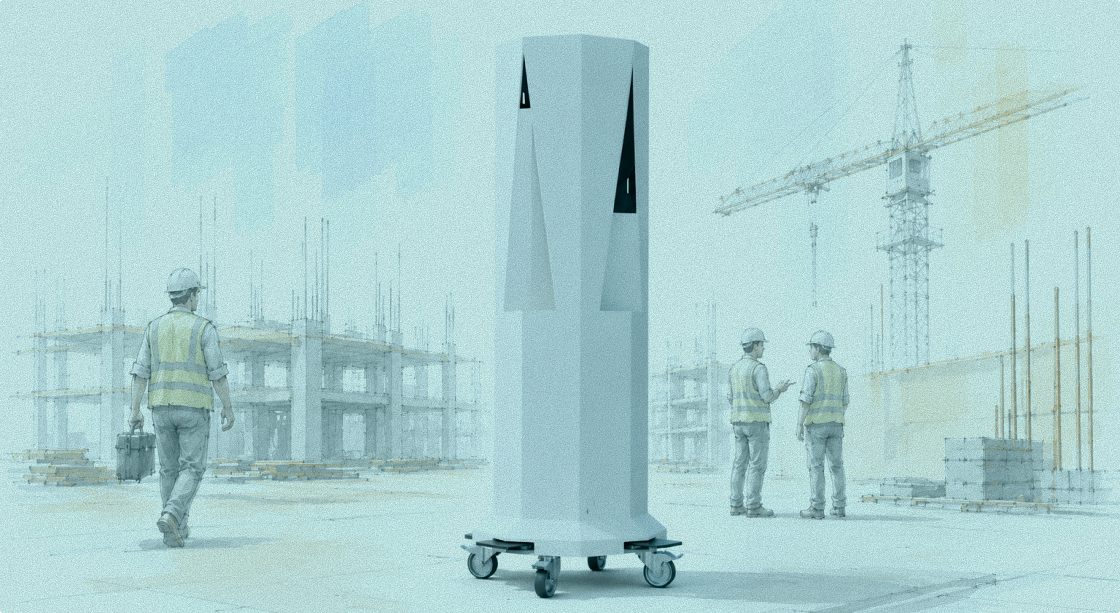
Daily-wage construction workers in urban and semi-urban India spend 8–12 hour shifts in extreme heat with no access to clean drinking water. Water arrives in tanker trucks and sits in open, unfiltered, shared containers — or they drink tap water, unhygienic and without basic consideration for the user.
Workers access water with dirty or wet hands between physically demanding tasks. No purpose-designed water infrastructure exists for this context.
RESEARCH
Understanding the User and Context
Who are we designing for ?
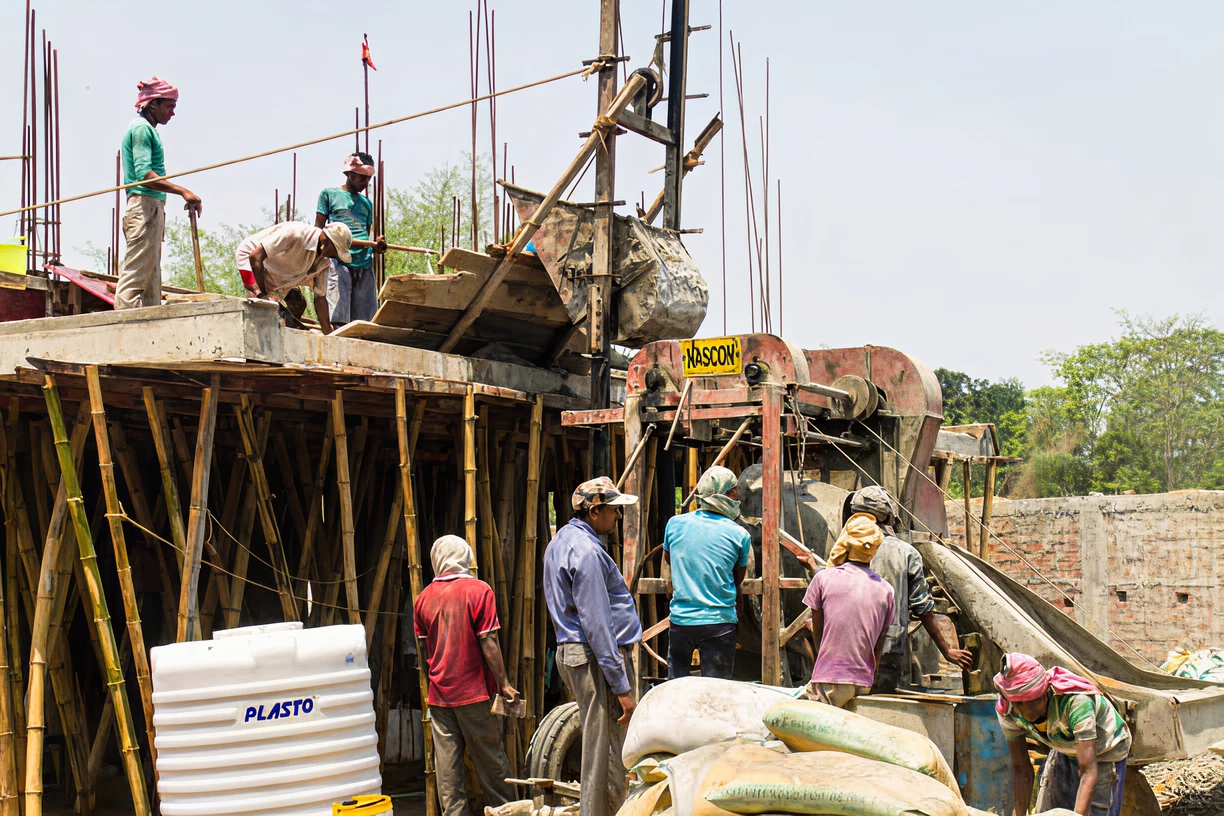
Construction workers spending long hours on active sites, often with limited access to safe and reliable drinking water.
What did we discover ?
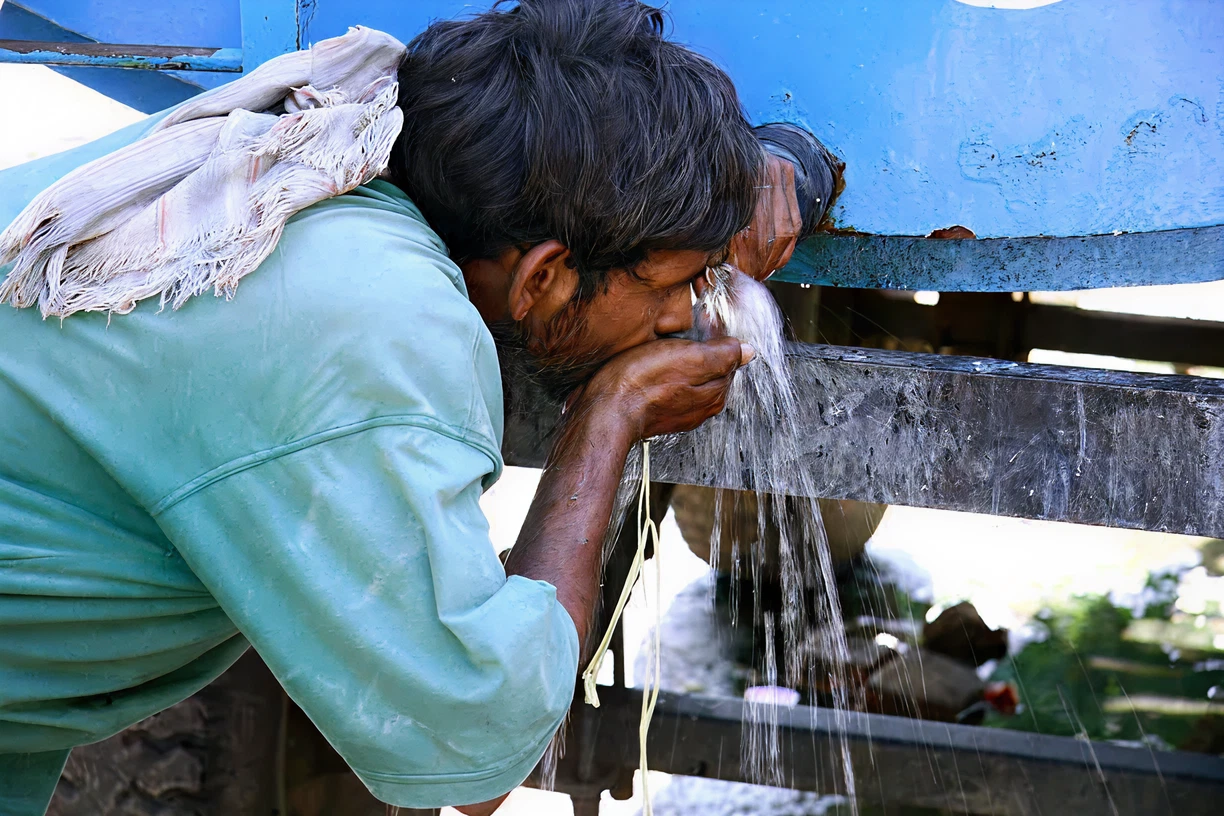
Water was commonly stored in open drums, making it difficult to maintain hygiene and easy access.
Where was the gap ?
The issue was not just the container, but the lack of a dedicated hydration system within construction sites.
When did it matter most ?
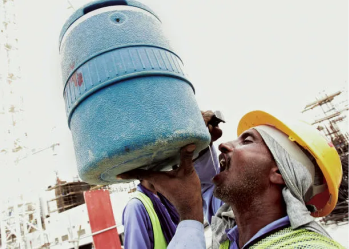
During peak heat hours and between tasks, when workers needed quick and frequent access to water.
Why was it worth solving ?
Construction workers build our cities, yet few products are designed specifically for their everyday needs. Hydration is a basic need, yet existing solutions overlook the realities of construction workers' daily lives.
THE PROBLEM
Construction workers on Indian sites are forced to drink from open, unfiltered, shared containers — with no hygiene, no dignity, and no infrastructure designed for them.
DESIGN BRIEF
Design a durable, low-energy water purifier and dispenser that survives harsh site conditions, requires no hand contact to operate, and serves clean water to the most ignored user.
USER PAIN POINTS
Key Challenges Identified
01

Contamination at source
Open, unfiltered tanker water shared by everyone, protected by nothing.
02

No hands-free interaction
Every tap or drum handle requires hands that are never clean.
03

One height fits nobody
Existing dispensers ignore the spread of worker heights and roles.
04

Direct mouth-to-tap
Workers without bottles put hands or mouth on shared surfaces.
05

Maintenance nobody owns
Filters clog. Tanks empty. No indicator, no assigned responsibility.
06

The product doesn’t belong here
Office and home products break within weeks under site conditions.
Ideation
Quick brainstorming sketches
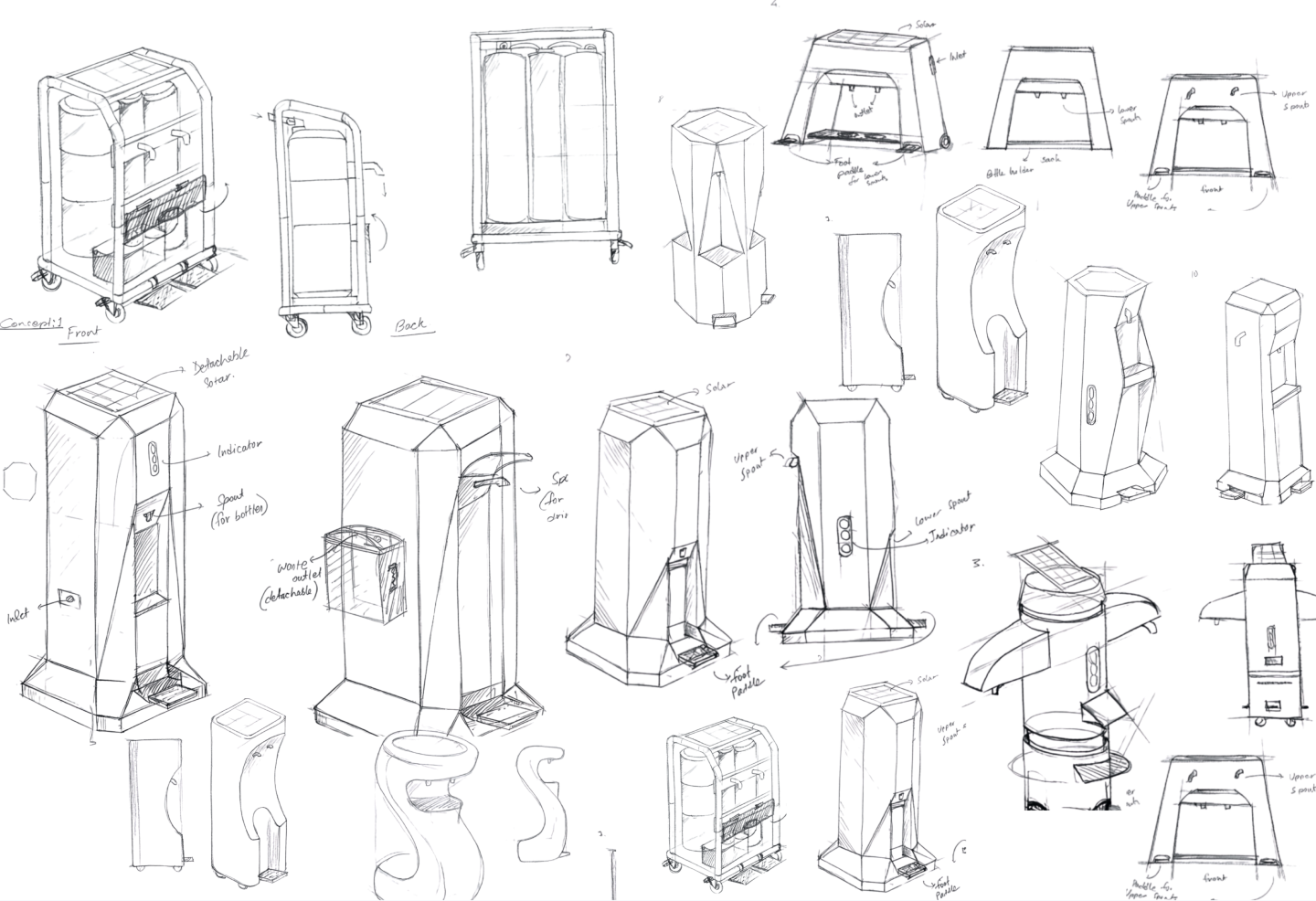
THE RESPONSE
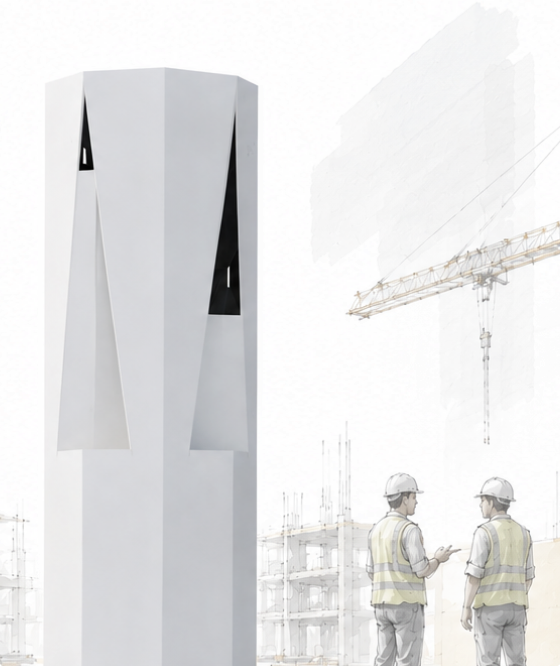
Designed for Construction Sites
A purpose-built water purification and dispensing system developed specifically for construction-site environments.
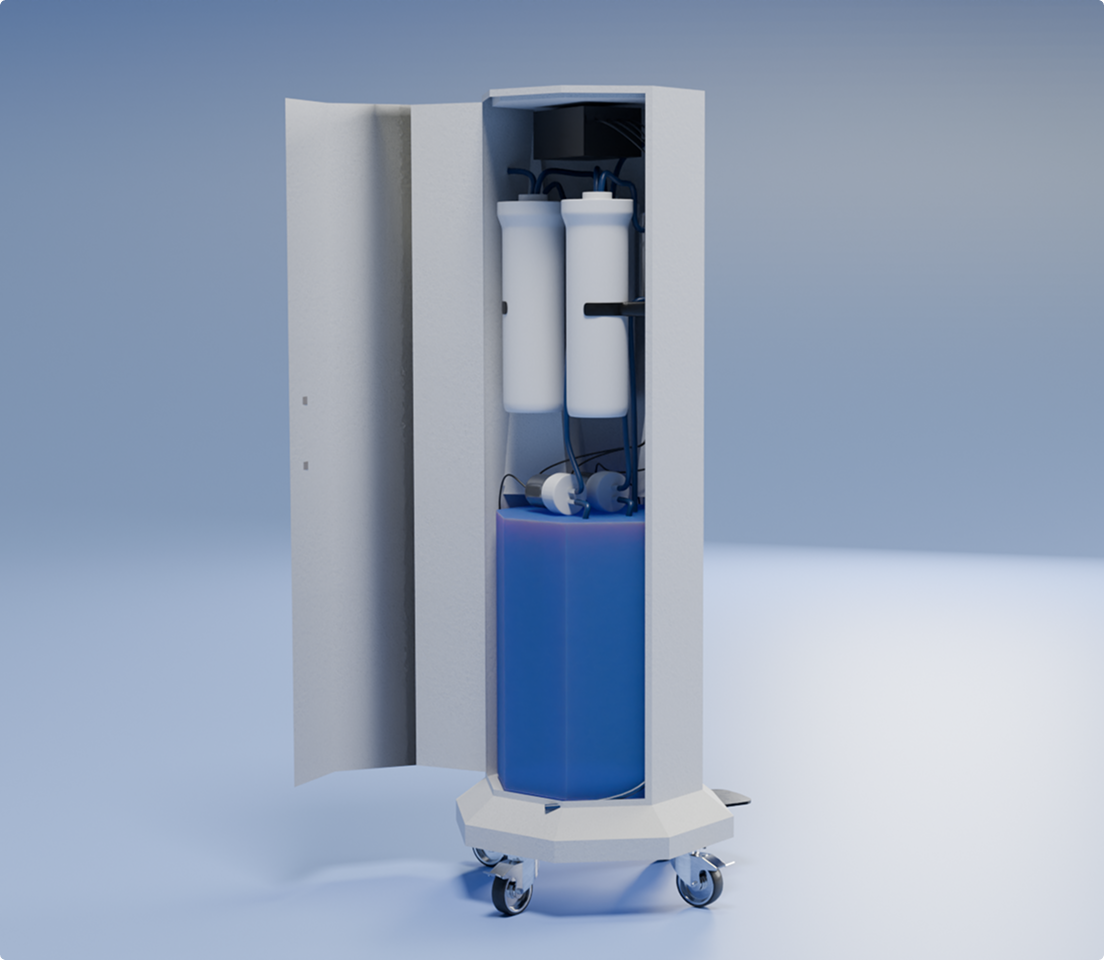
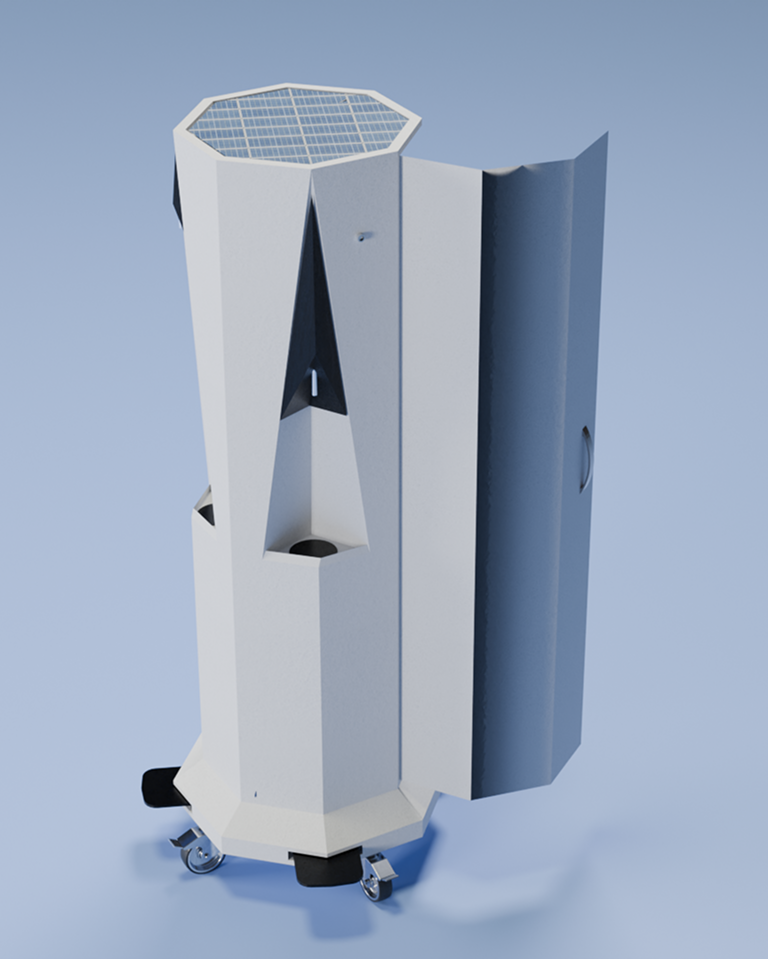
Combining solar-powered operation, multi-stage filtration, hands-free dispensing, and mobility, the design provides safe and reliable access to drinking water while addressing the environmental and operational challenges identified during research.
ANATOMY
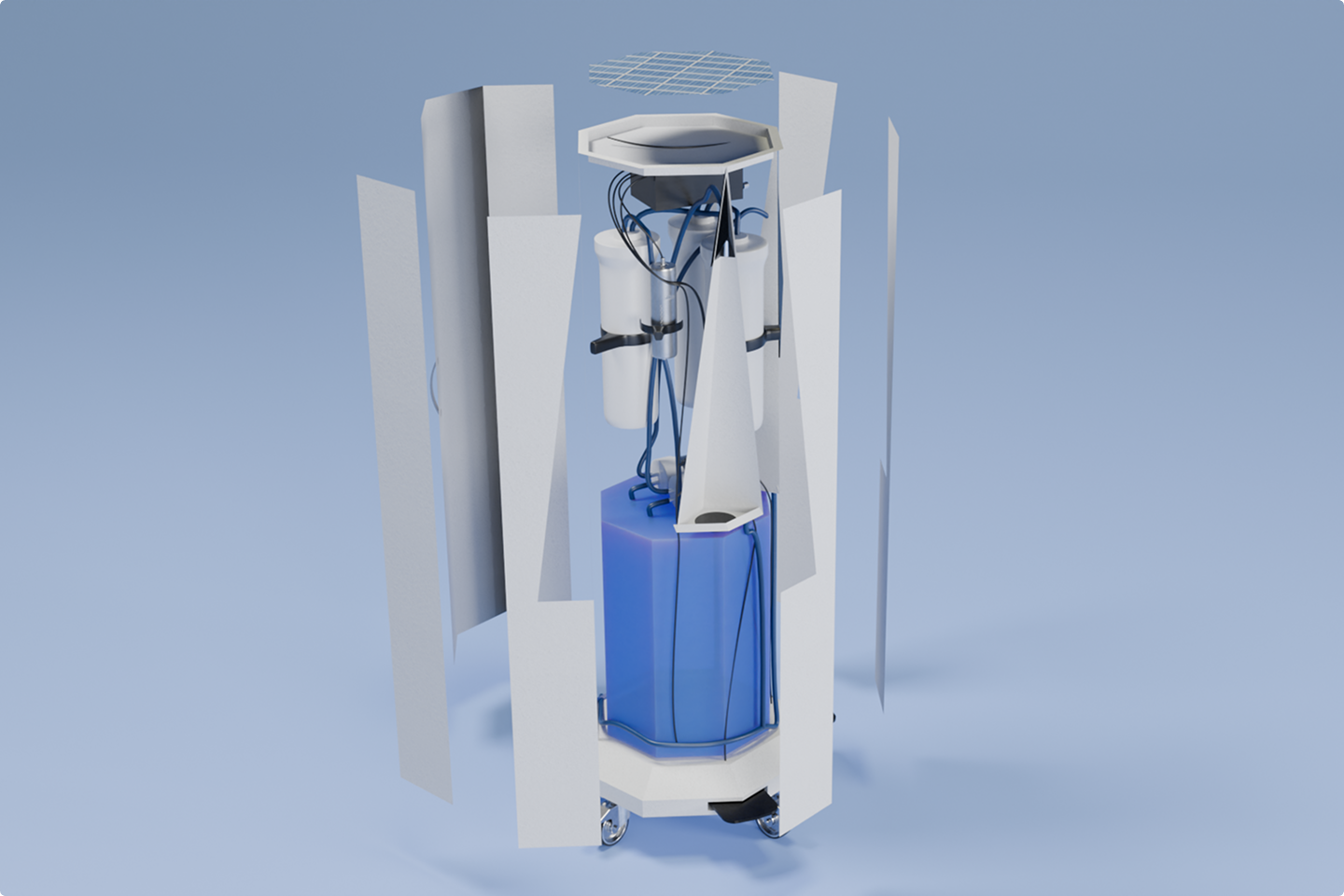
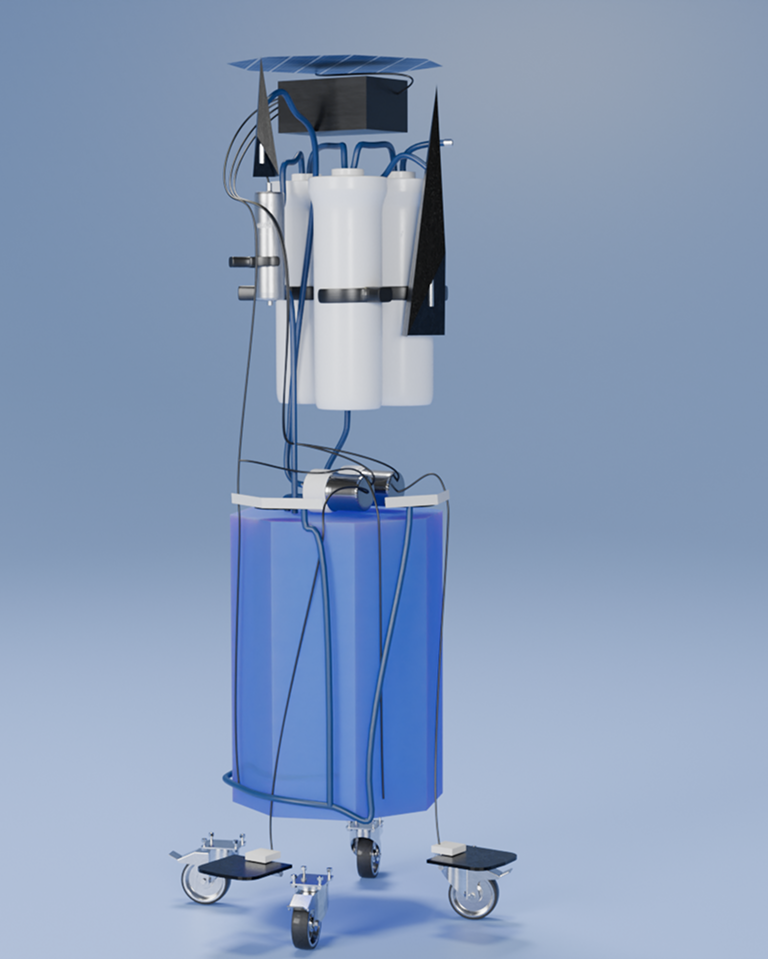
Key Components and Functions
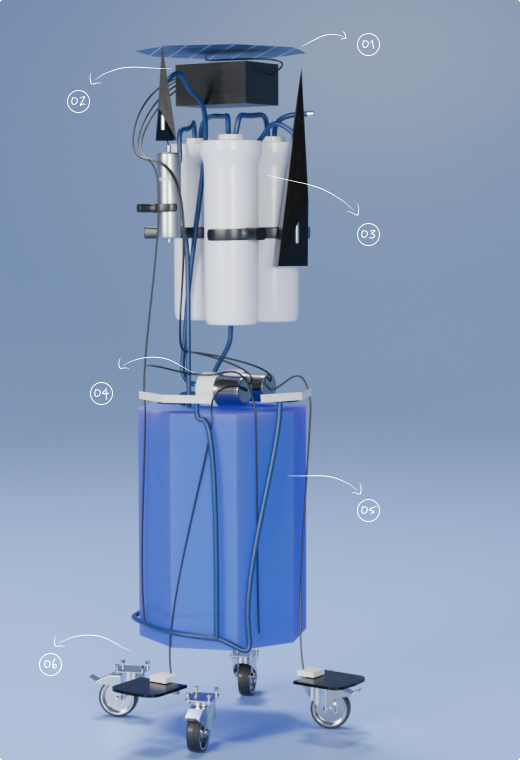
- 01
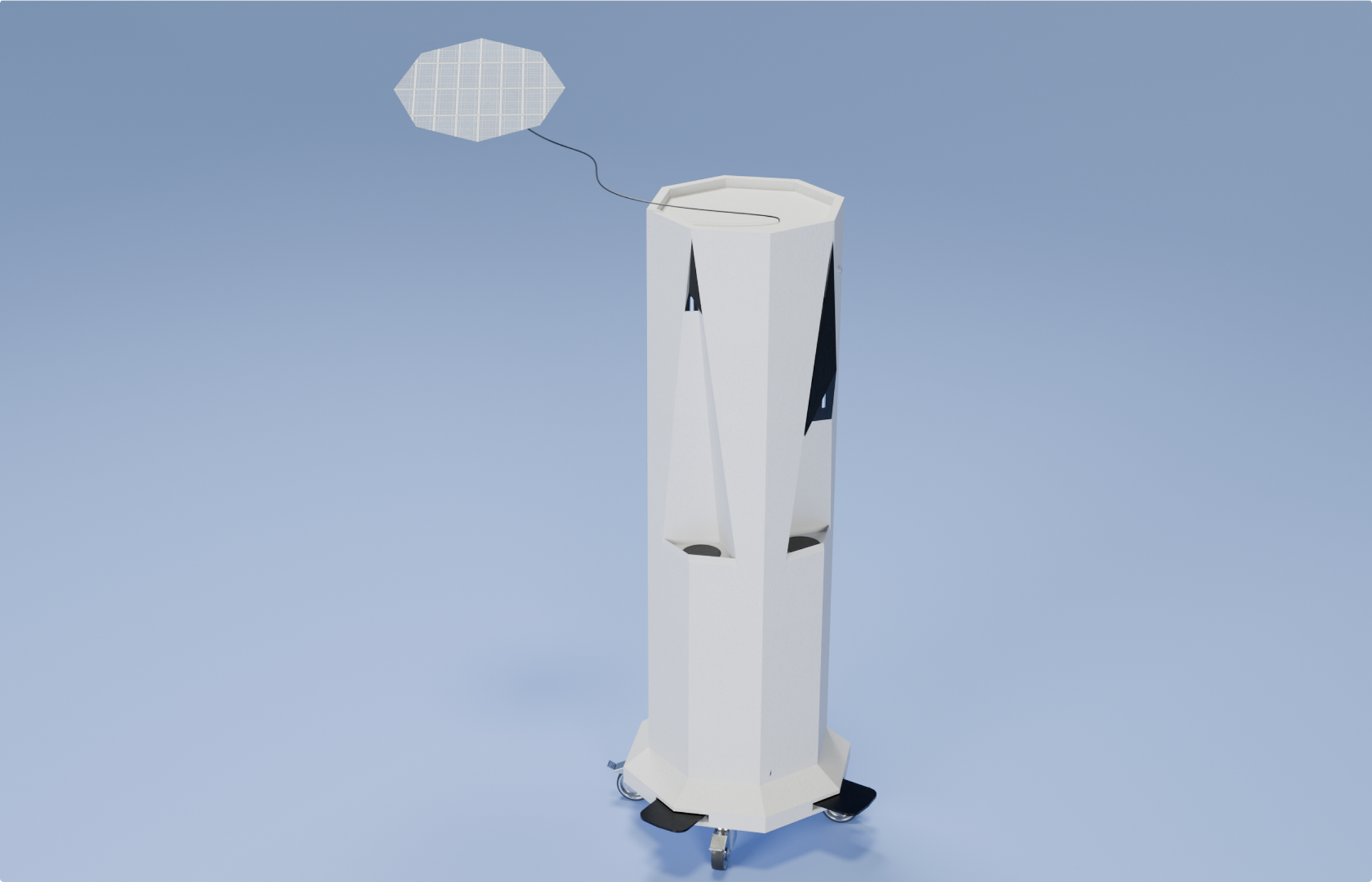
Solar Panel
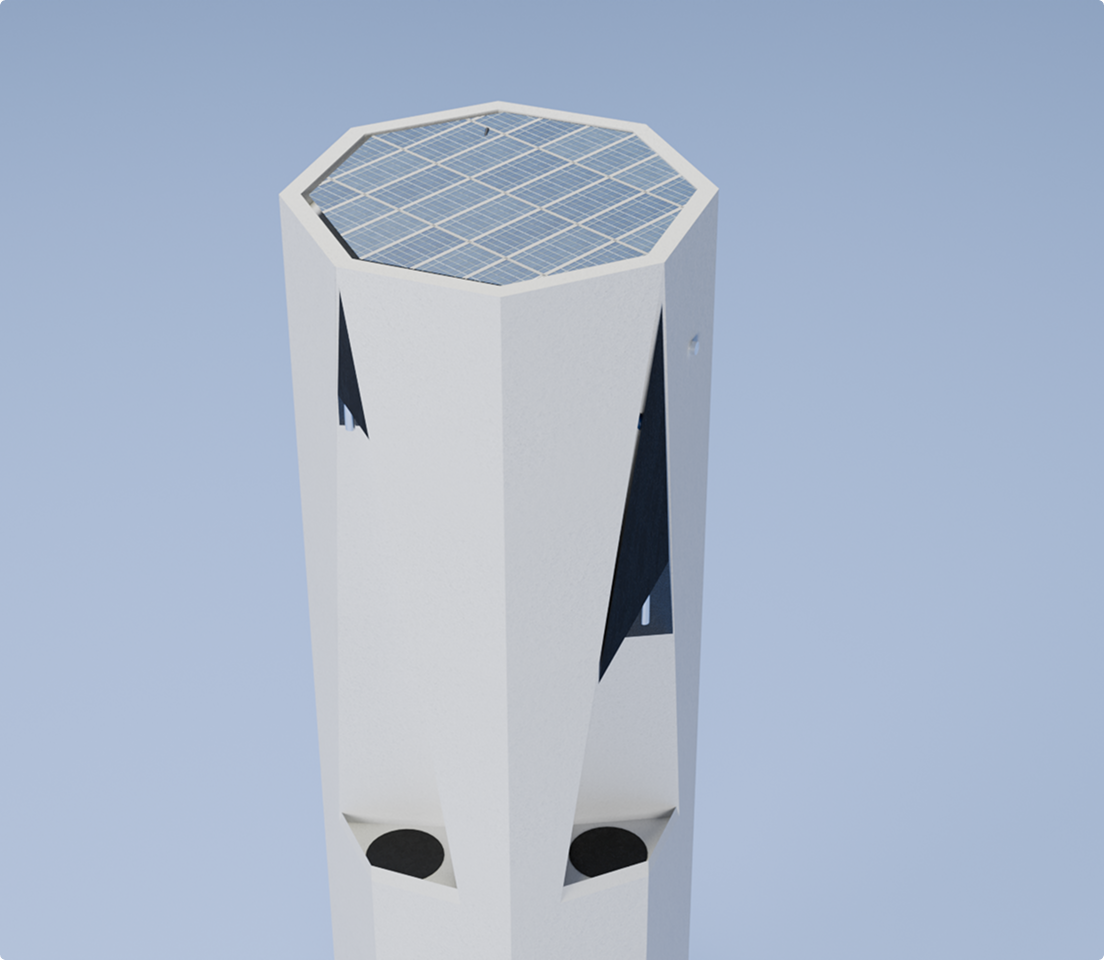
1.5ft octagonal, removable, 30–40W peak. 5m wire — placeable on any sun-exposed surface.
- 02
Battery
12V, 7–12Ah. Stores surplus charge for overcast periods.
- 03
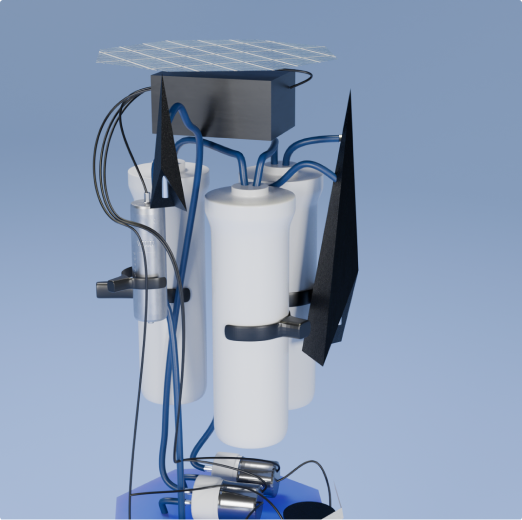
Filter Stack
Four stages: sediment → carbon → ceramic → UV. Modular and tool-free replaceable.
- 04
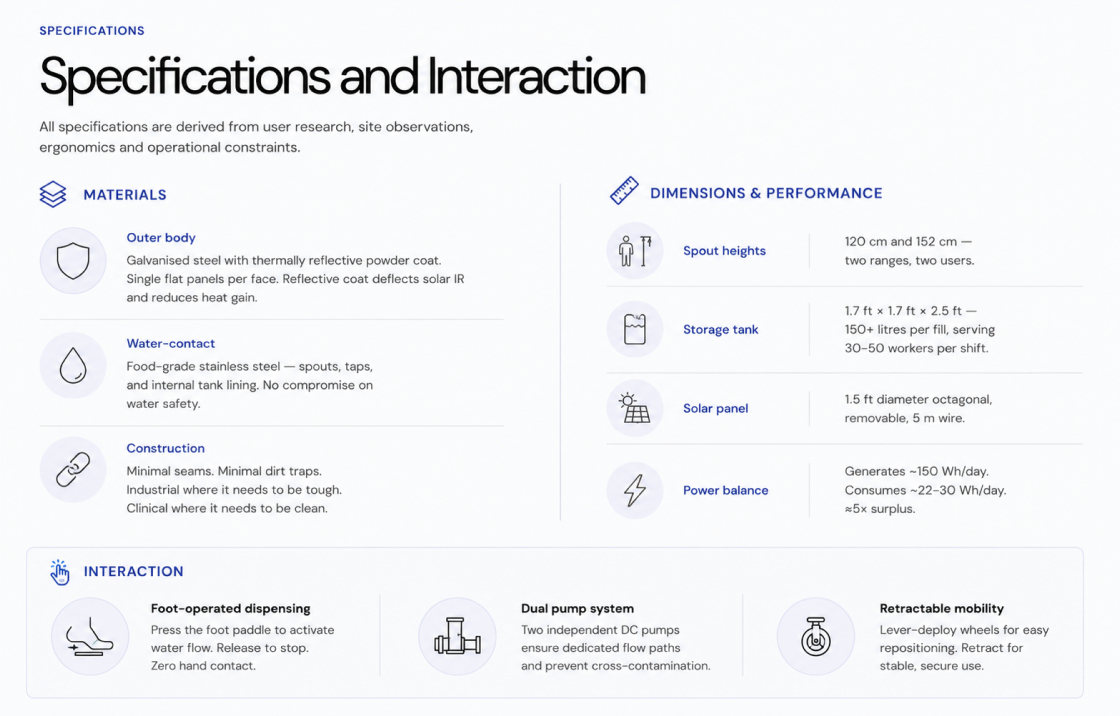
Two DC Pumps
One per spout. No shared flow path, no cross-contamination.
- 05
Storage Tank
1.7ft × 1.7ft × 2.5ft. 150+ litres per fill. Sealed and enclosed.
- 06
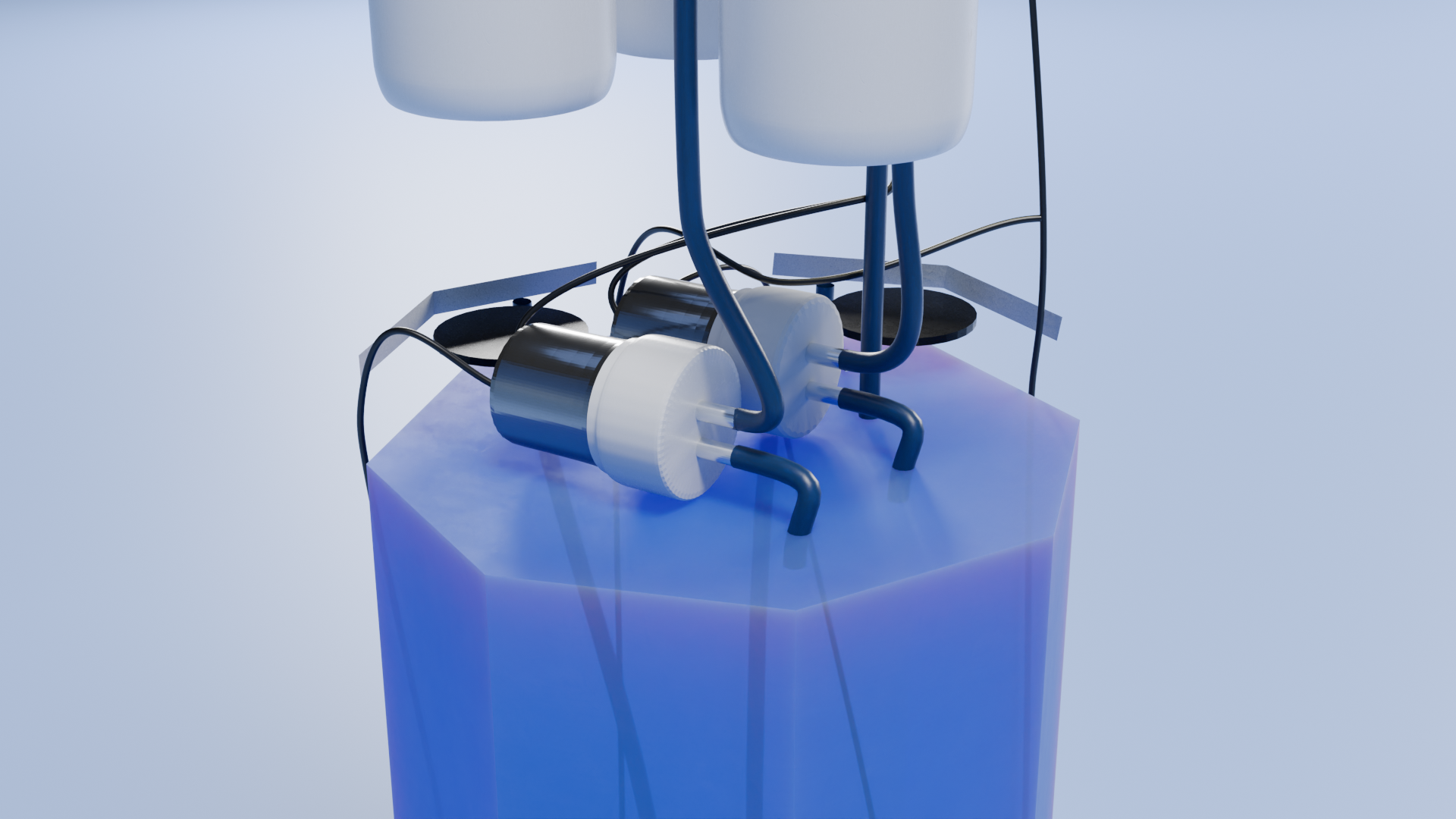
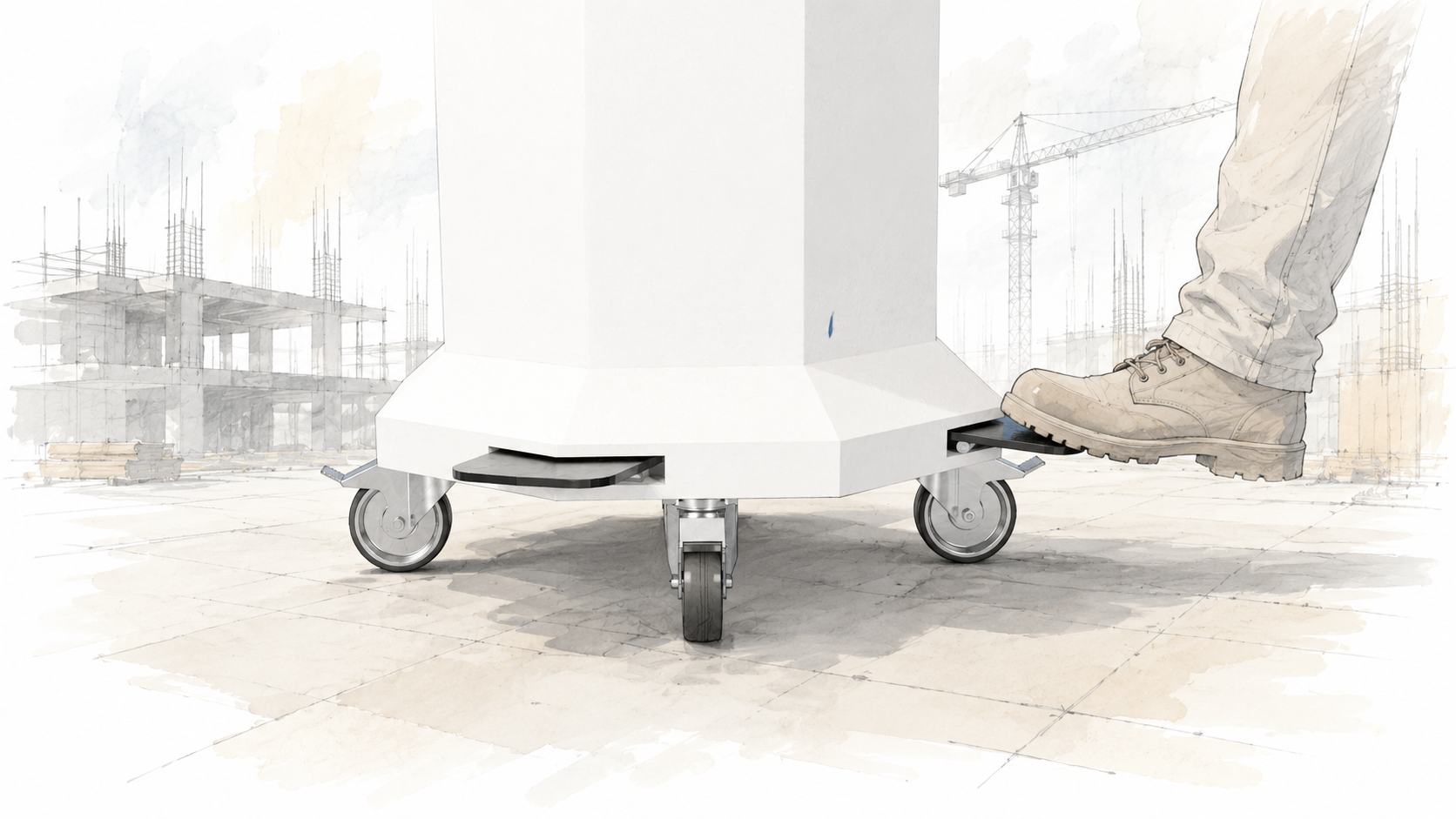
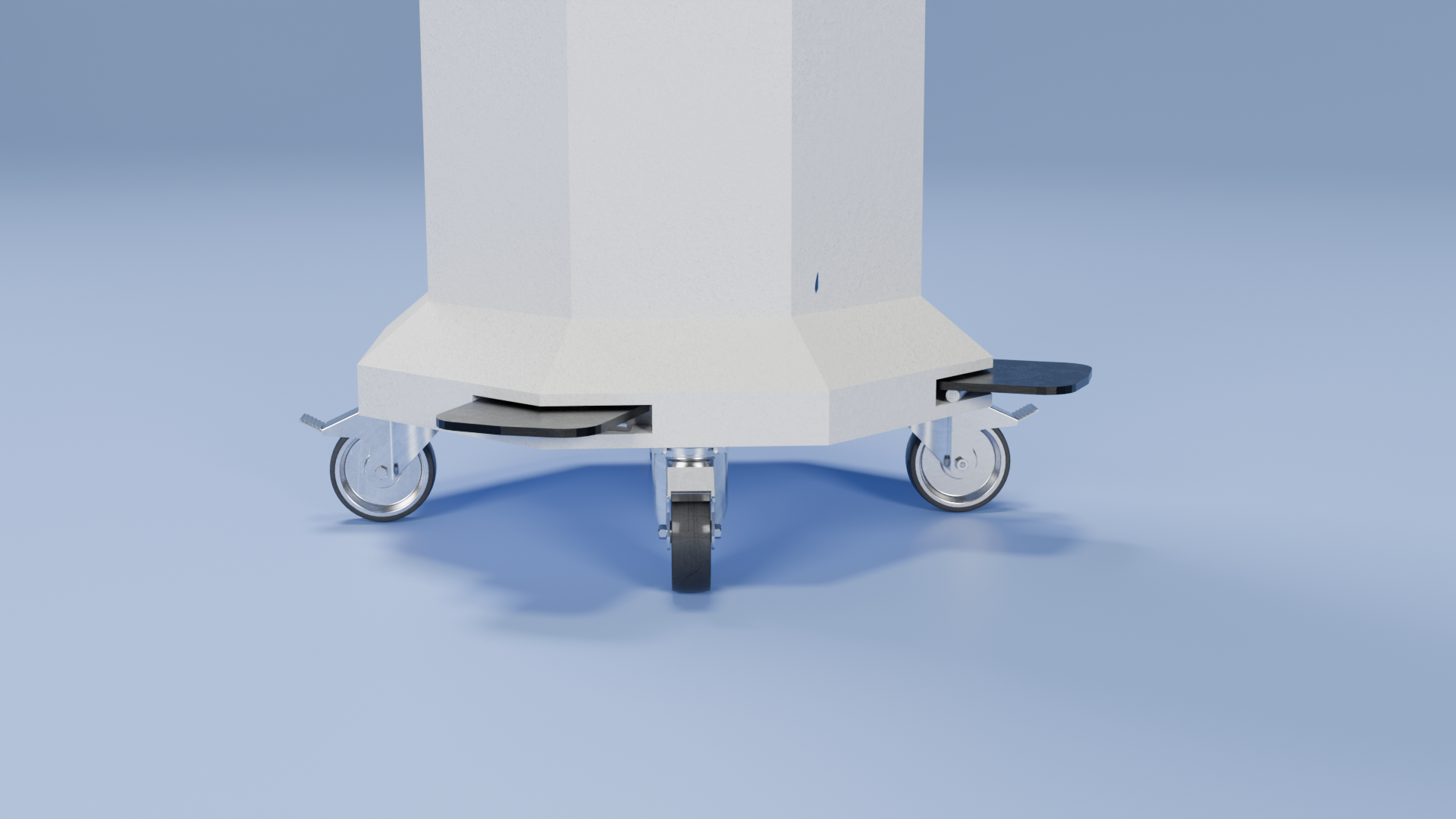
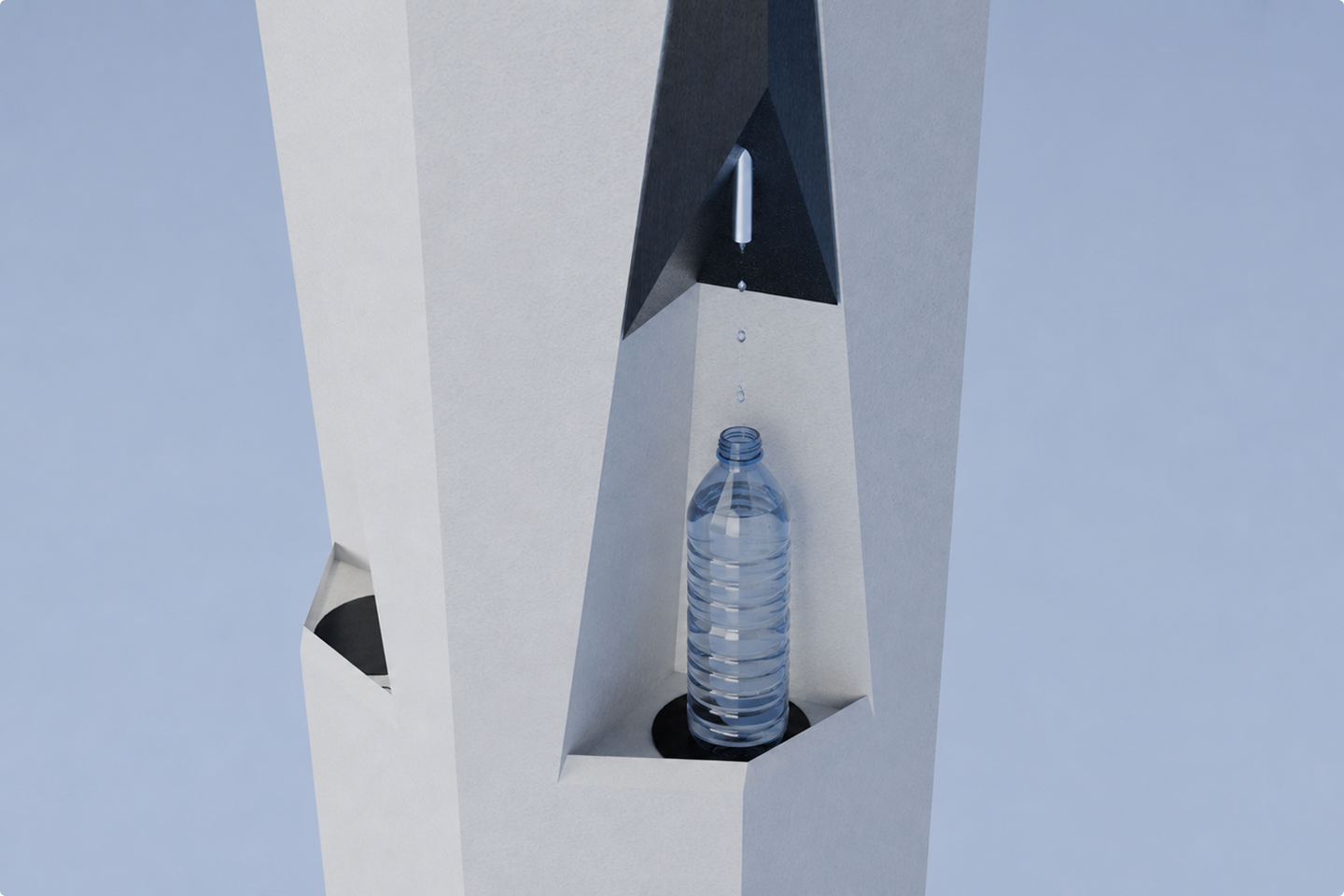
Foot Paddle + Wheels
Paddle activates pump. Retractable casters for site repositioning.
Process
Water Treatment Process
Sediment
Removes dust & mud
Carbon
Removes odour & chlorine
Ceramic
Blocks bacteria
UV Lamp
Final sterilisation
MECHANISM
No handles No hand contact
FINAL FORM
The unit, from every angle.
REFLECTION
Key Takeaways
Designing for an underserved user group reshaped the entire project. Every decision was guided by a simple question: could it withstand the realities of a construction site? This led to a focus on simplicity, durability, and ease of use. Rather than adding features, the process involved removing complexity, resulting in a system that provides clean drinking water with minimal effort or maintenance.