

I.S.B.T. Flyover.
Turning the unused surface above a Dehradun flyover into a multi-level public space — amphitheatre, kids park, indoor games, and amenities atop a high-footfall transit zone.
- Year
- 2025
- Discipline
- Spatial Design
- Hypothetical client
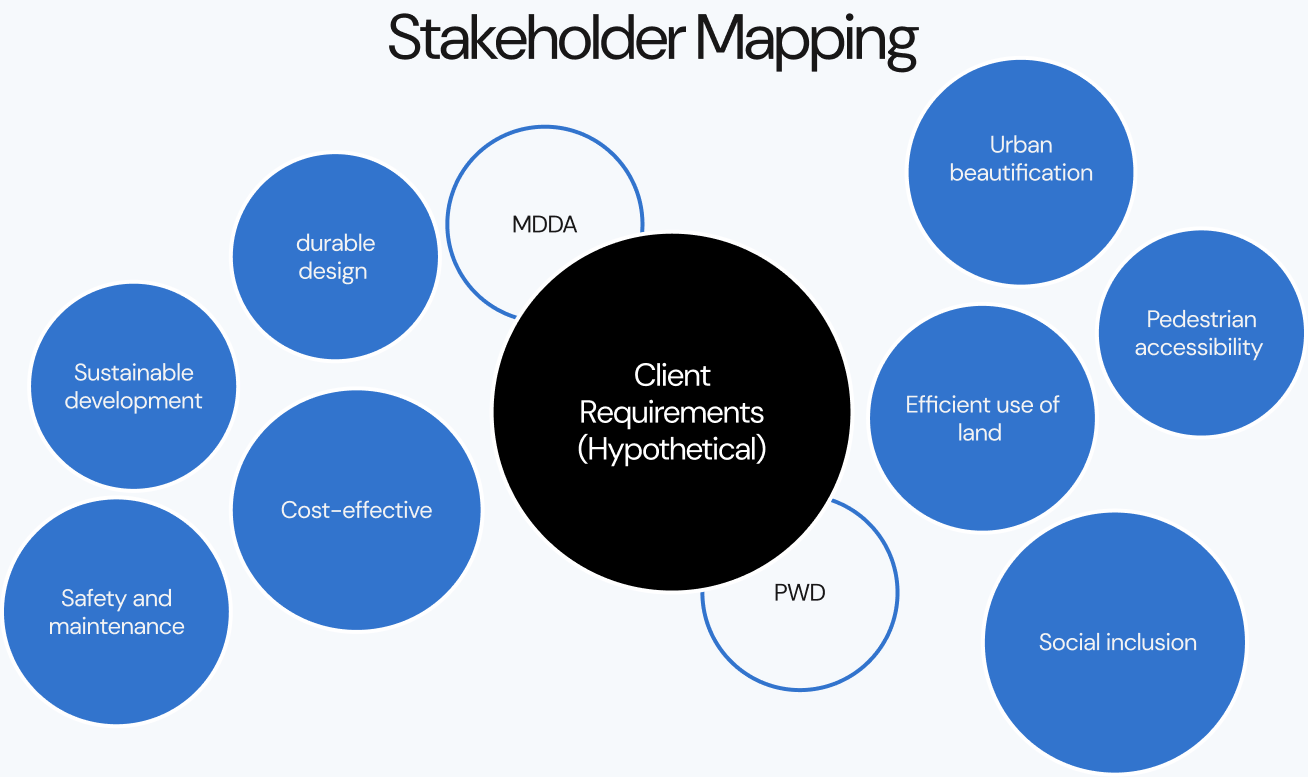
- MDDA / PWD
THE SITE
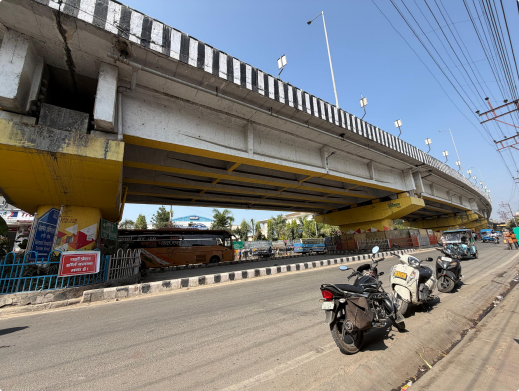
Dehradun I.S.B.T.
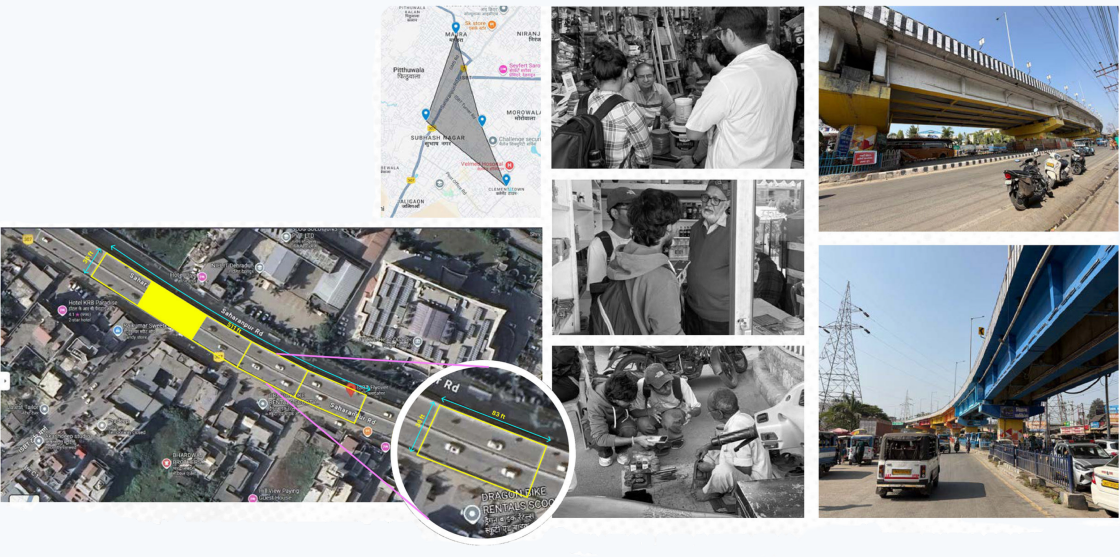
Connects Transport Nagar to the Shimla bypass. Foundation laid on March 2013 with a total budget of ₹50.39 Cr. Opened on December 11, 2016, after years of political and construction delays.
- Length
- 83 ft / compartment
- Width
- 36 ft / compartment
- Nearby
- Turner Rd · Majra · Clement Town
SCOPE
Defining the boundaries of intervention
INCLUDED
- Spatial planning — seating, stage, circulation
- Structural coordination with existing flyover
- Material & finish selection
- Landscape, shading, ventilation
- Furniture & fixtures
- Wayfinding & accessibility
EXCLUDED
- Real construction work
- Structural calculations / load testing
- Cost estimation / budget
- Electrical, plumbing, mechanical detail
- Real client engagement (MDDA/PWD hypothetical)
RESEARCH
Understanding people, place, and potential
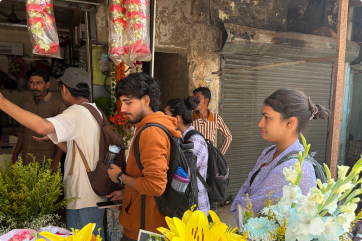
ON-SITE OBSERVATION
User behaviour, traffic flow, problem spotting at peak and off-peak hours.
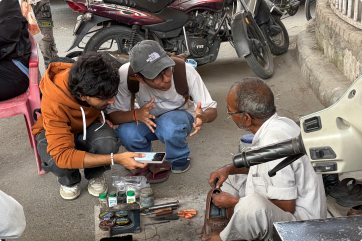
STAKEHOLDER INTERVIEWS
Locals, students, shopkeepers, drivers, travellers, parents, bike riders, kids.
DOCUMENTATION + CLUSTERING
Extracting patterns across responses; surfacing what to prioritise.
“Users perceive the under-flyover as neglected, unsafe, and uncomfortable — lacking identity and human scale.”
PROBLEMS OBSERVED
Why the space remains underused ?
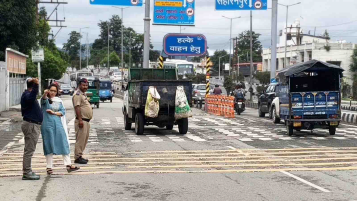
Lack of Green Infrastructure
Harsh microclimate, no trees. No softscape or visual relief. Unpleasant for daily users.
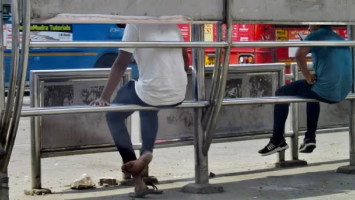
Absence of Essential Amenities
No public toilets or water. No seating or shaded rest. No charging or waiting areas.
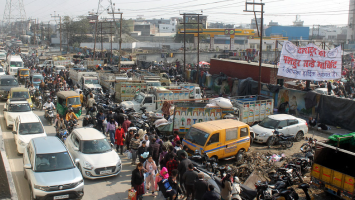
Poor Maintenance & Safety
Unhygienic and littered. Unsafe especially for women. Poor drainage, smell issues.
THE PIVOT
What if we stopped designing UNDER the flyover, and started designing OVER it?
The unused surface above the flyover is the largest underused public asset on the route. We shifted scope from underpass to overhead — a multi-level public space on and around the flyover that fosters social inclusivity and community engagement.
PROPOSED FACILITIES
What goes up. What stays out.
IMPORTANT
- Sports facility
- Open amphitheatre
- Children's park
- Amenities complex
INTEGRATED
- Waiting area
- Seating complex
- Parking complex
NOT REQUIRED
- Co-working
- Stand
- Study complex
- Open gym
NOT REQUIRED
- Art gallery
- Open stage
- Auditorium
- Salons
- Yoga studio
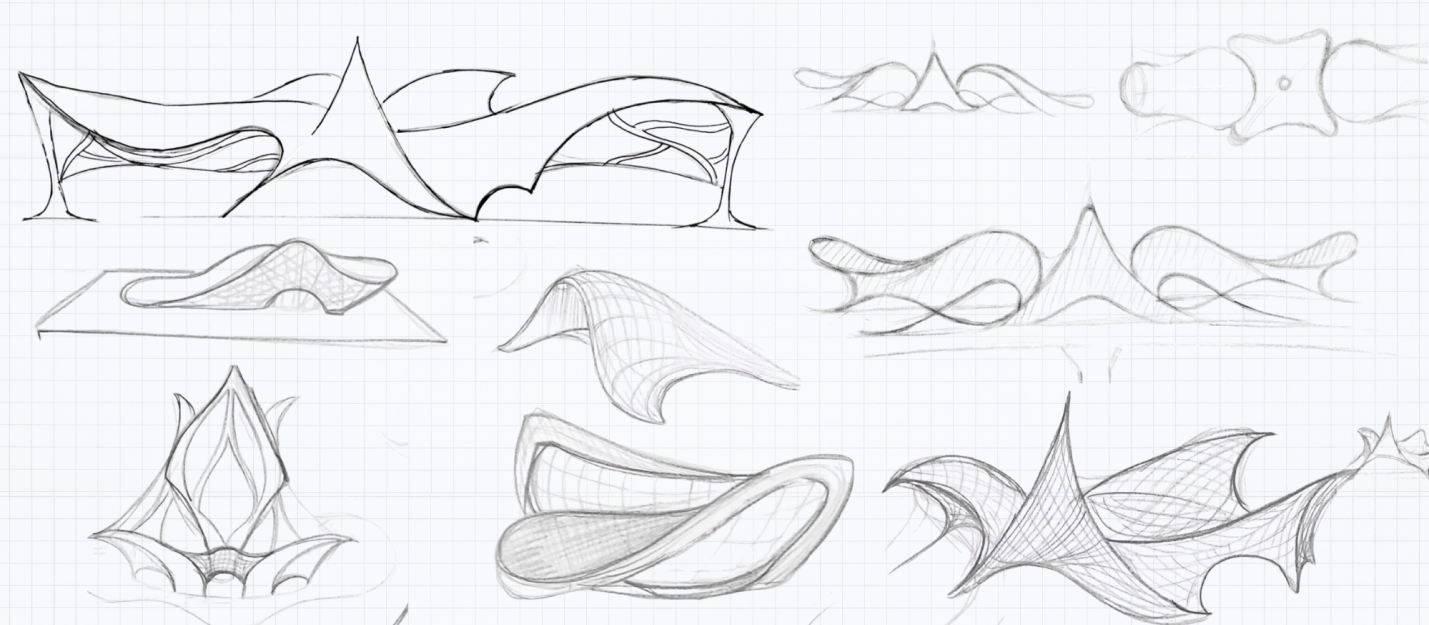
INITIAL ITERATIONS
Exploring the forms
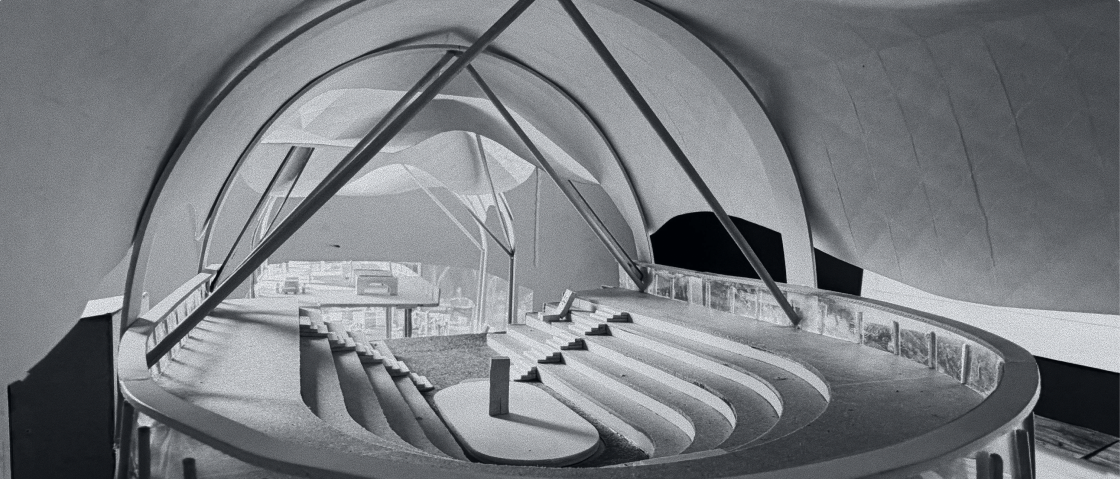
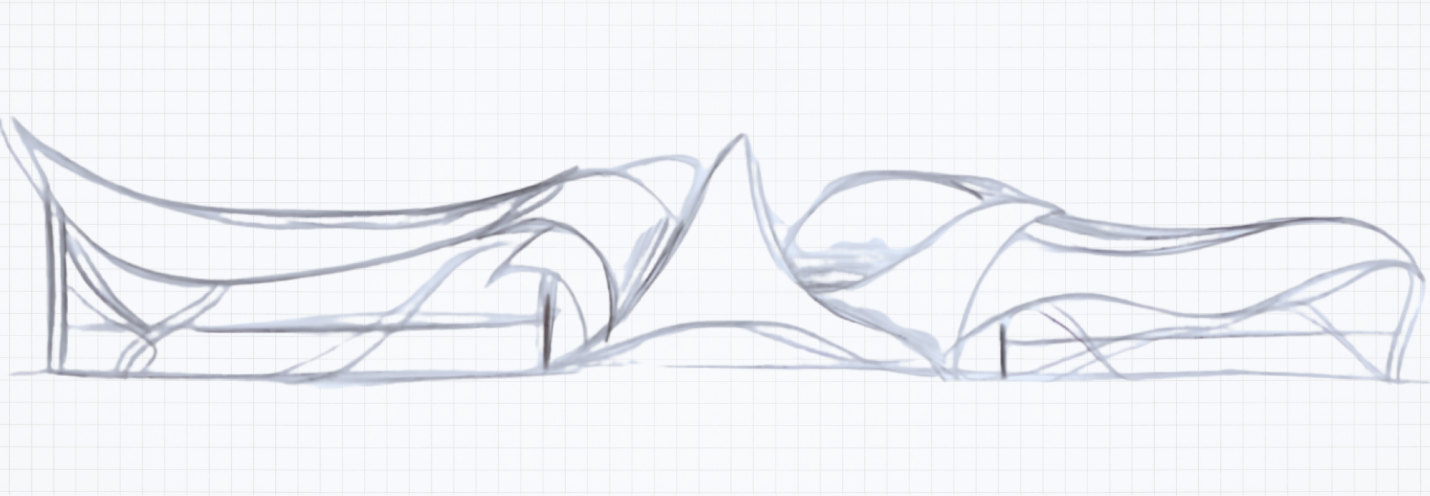
Final Form
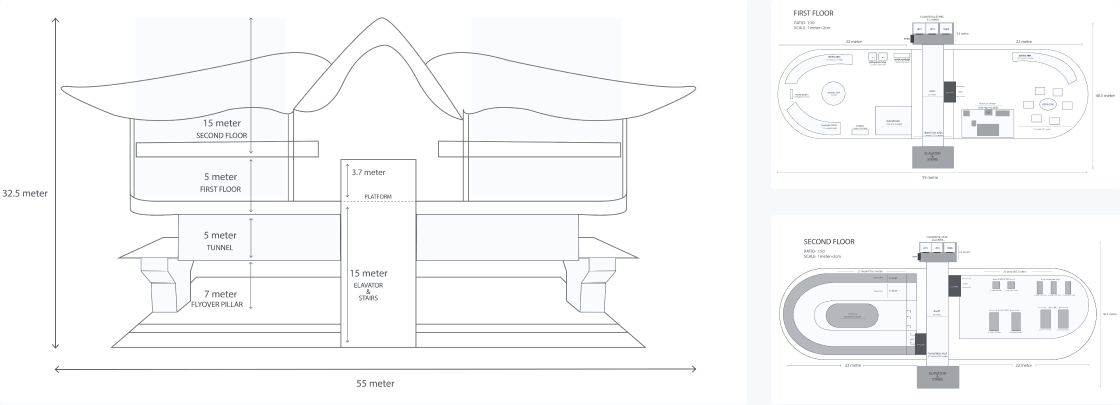
ZONING & PLANS
Activity and movement
SENSORY DESIGN
Designing beyond visual
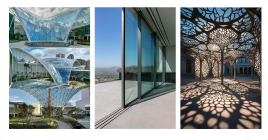
SIGHT
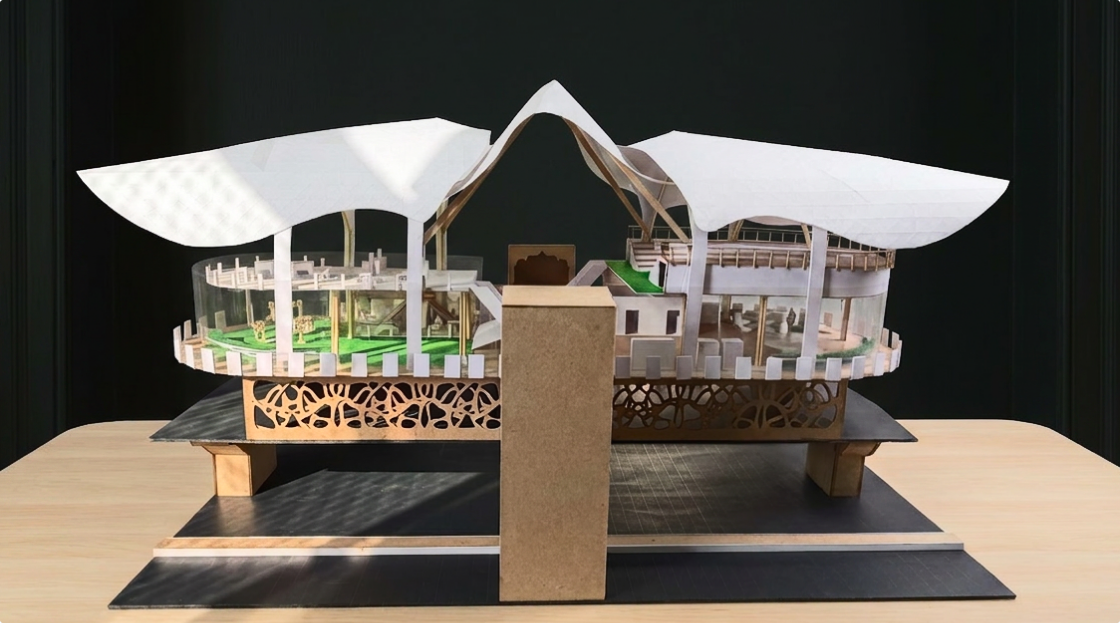
Tensile canopies, glass facades, perforated shadow screens.
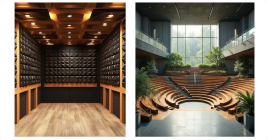
SOUND
Acoustic wooden interiors. Amphitheatre seating for natural focus.
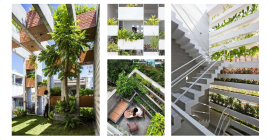
SMELL
Vertical greenery. Planted railings. Garden stairwells.

TOUCH
Smooth concrete. Terracotta jali. Textured red earth walls.
FABRICATION
Lightweight, sustainable, and adaptable
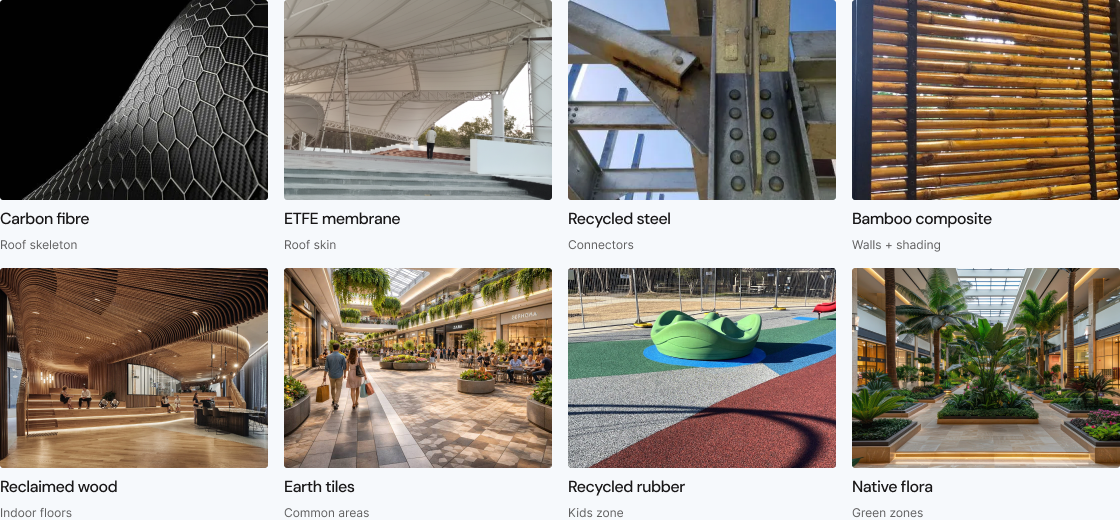
The proposal utilizes lightweight and recyclable materials to minimize additional structural load while promoting long-term sustainability.
SUSTAINABILITY HIGHLIGHTS
- Carbon-fibre reduces load on the existing flyover.
- ETFE roof — natural light + heat reduction + fully recyclable.
- Recyclable, low-impact materials throughout.
PROTOTYPING
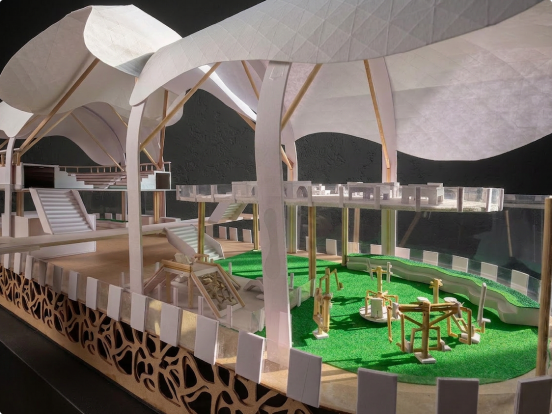
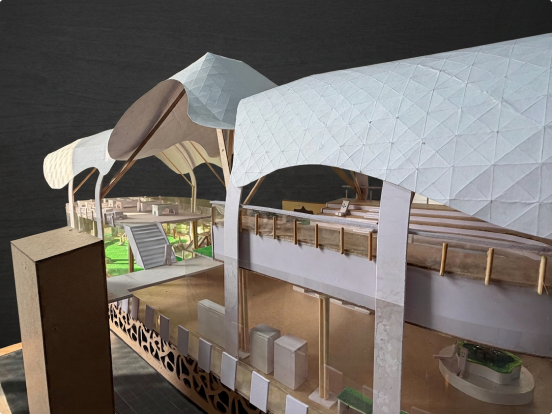
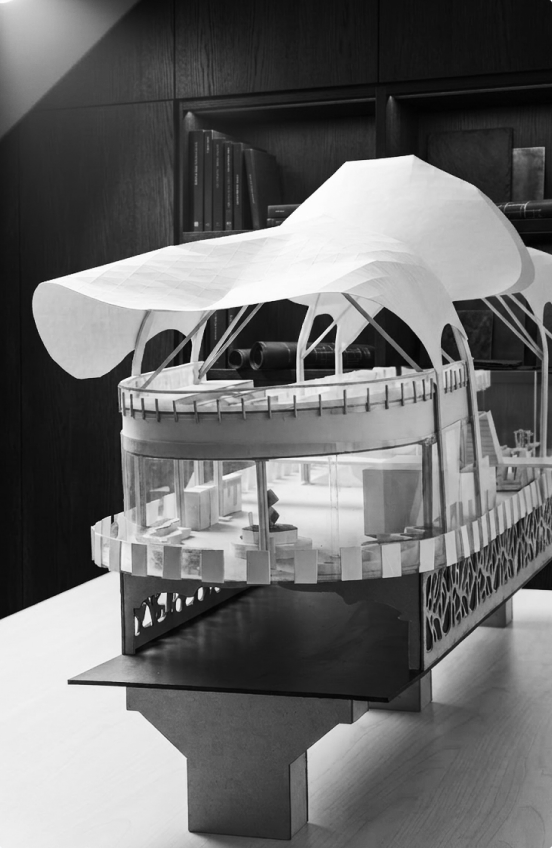
Model Making
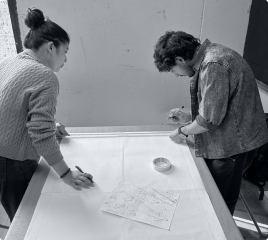
SCALING
1m : 2cm. Drafting the curves and dimensions at scale on large sheets.
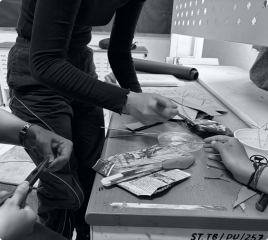
MATERIAL TESTING
Starching fabric to test the canopy skin behaviour.
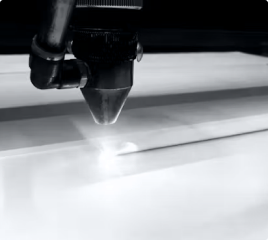
SVG + LASER CUTTING
Elevator booth, flyover pillars, tunnel pieces, archways.
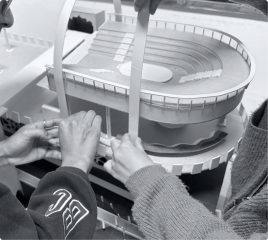
MODEL ASSEMBLY
Team build — fitting the laser-cut pieces together.
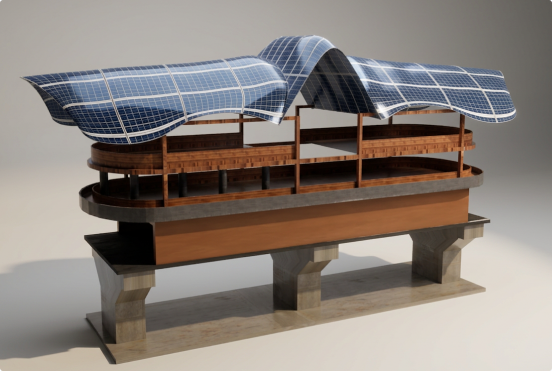
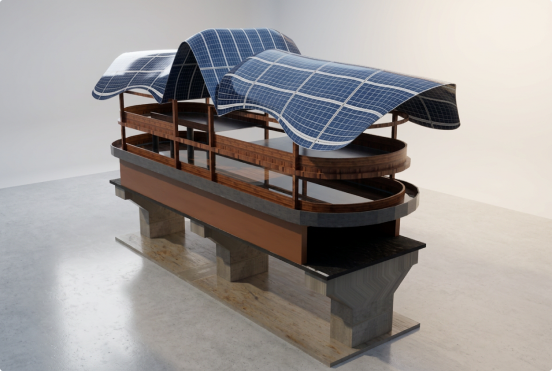
Final Prototype
REFLECTION
Key Takeaways
The project’s biggest insight came from reframing the problem. Research revealed that the under-flyover area had limited potential, while the unused surface above offered a far greater opportunity for public use. This shift transformed the project from a simple redesign into an exploration of how infrastructure can create meaningful civic spaces. Working in a multidisciplinary team also reinforced the value of clear roles, trust, and collaboration in delivering stronger outcomes.