

From Clutter to Comfort.
A compact desk organizer and laptop stand designed for hostel students who study, eat, sketch, and work from the same limited workspace.
- Year
- 2024
- Discipline
- Product Design
- Duration
- 4 weeks · Individual
- Users
- Hostel Students · Desk Job Person
- Mentor
- Mr. Utsav Baluni
CONTEXT
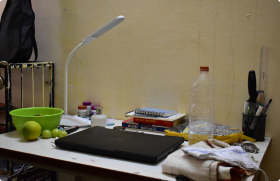
One Desk, Multiple Roles
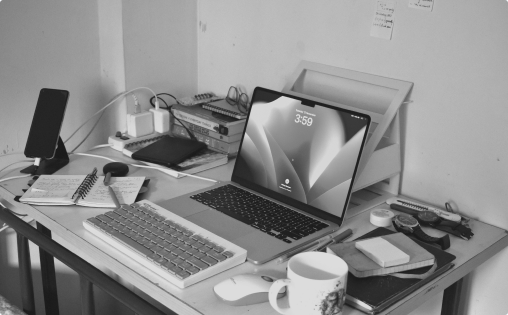
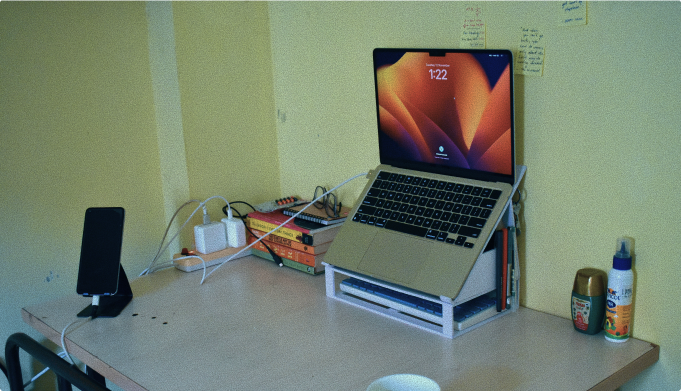
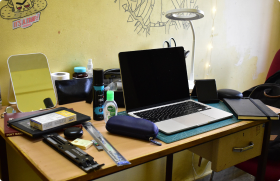
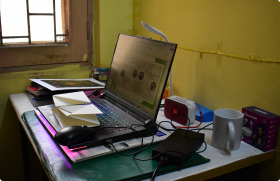
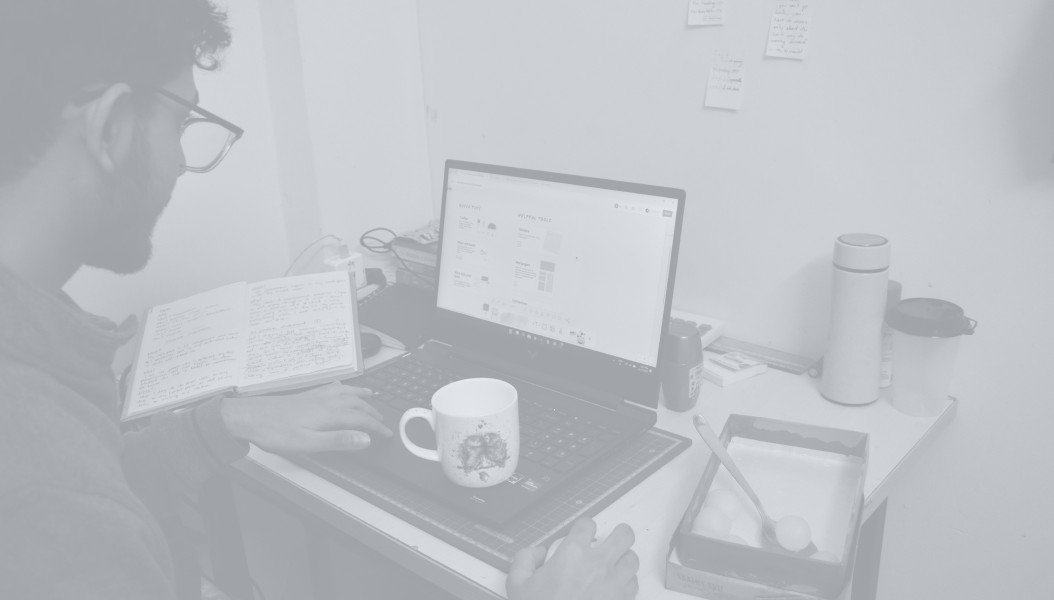
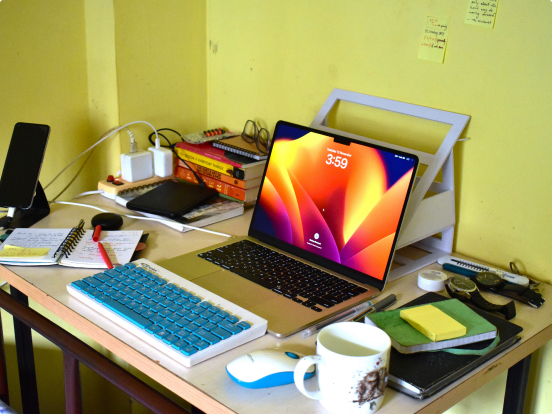
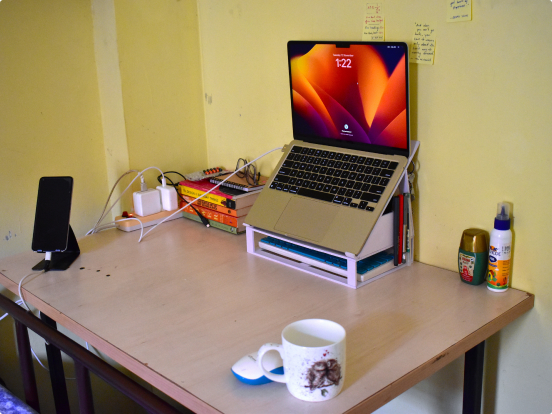
In most hostel rooms, a single desk serves as a study station, dining table, storage unit, and creative workspace. As tasks change throughout the day, objects constantly need to be moved, creating clutter and disrupting focus.
What started as personal frustration became the brief: design for hostelers who can’t add a second desk, but desperately need a way to keep this one usable.
METHODOLOGY
Design Process
DISCOVER
Desk research, 5W framing, user journey, mind map, benchmark analysis.
DEFINE
5 Whys analysis, surveys, interviews, brief.
DEVELOP
Brainstorming, ideation sketches, low-fi prototypes, material exploration.
DELIVER
Real-world testing, user feedback, iteration plan.
RESEARCH FINDINGS
What Users Revealed
91%
Lack of storage impacts productivity.
100%
Workspace state affects focus and task completion.
73%
Find their workspace cluttered or disorganized.
64%
find it challenging to keep their workspace clean and organized — even when they want to.
5 WHYS
Understanding the Root Cause
- 01
Why do hostel students need an attached organizer?
- 02
Why is the workspace becoming cluttered?
- 03
Why is there a lack of storage, and what does it cost?
- 04
Why is a clutter-free workspace important?
- 05
Why does this impact productivity at all?
DESIGN BRIEF
Design a simple, space-efficient product that helps users organize their essentials and reduce desk clutter, allowing them to switch between activities without repeatedly clearing their workspace.
THE CONCEPT
One Sheet. One Process. One Product.
After exploring multiple concepts, the strongest solution emerged from a principle of simplicity. The design uses a single sheet of metal that is cut and bent into shape without requiring hinges, screws, or additional components. This approach reduced manufacturing complexity, minimized material usage, and created a low-cost product that could be assembled quickly while maintaining structural strength.
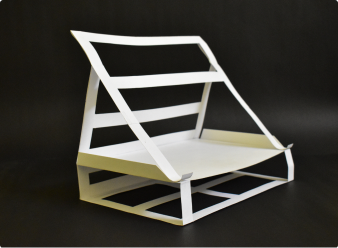
PROTOTYPING
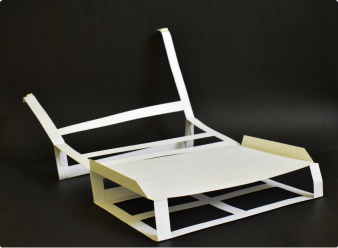
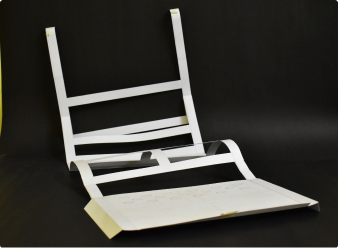
Iterating Through Form
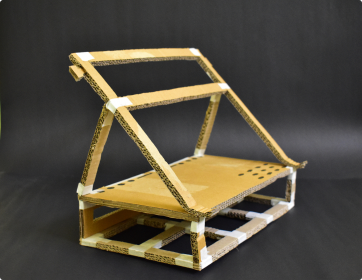
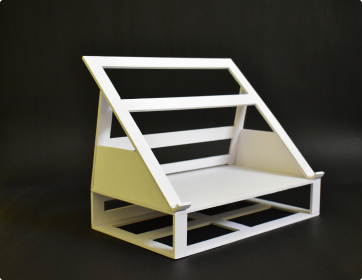
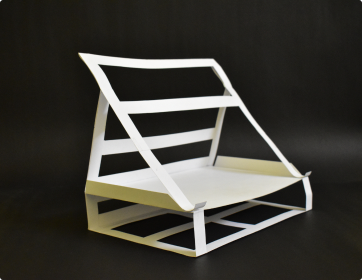
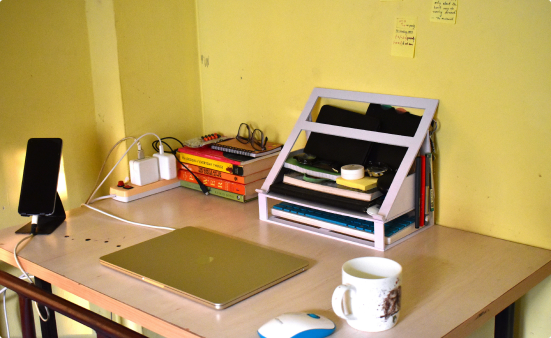
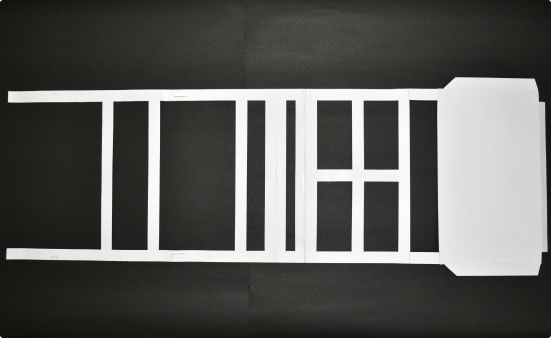
The mid-fidelity prototype: final form, real material, ready for the desk.
TESTING
Evaluating Workspace Impact
FEEDBACK
What Worked — And What Didn't
What needed fixing
- Too many sharp corners and edges.
- More material than necessary.
- Overall form-flow could be cleaner.
Next iteration
- Soften corners and edges throughout.
- Remove the lower section; lighter sheet stock.
- Add cutouts on the middle and sides for breathability.
- Refine the bend sequence for smoother form-flow.
REFLECTION
What I took away.
This project reinforced an important lesson: constraints often lead to the most effective solutions. By focusing on a specific user group, a limited space, and a simple manufacturing process, the design became clearer, more practical, and easier to understand. Rather than adding features, the solution emerged through reduction — one sheet, one process, and one purpose: making a small workspace work better.